Keynote Speaker Fees: How a Quote Gets Built
Keynote speaker fees confuse planners because nobody explains the inputs. Here is what moves a quote, which pricing shapes exist, and how to get a real number.
8 min read
- Featured on Netflix
- Ranked 7th in the world in mentalism
- Shows and keynotes for companies
On this page
- Why will nobody publish a keynote speaker fee?
- What actually goes into the number?
- Which pricing shape is the quote written in?
- Does a shorter talk cost less?
- What am I actually paying a keynote speaker to do?
- Where I say the honest thing about influence
- When should you not pay a keynote fee at all?
- What to check before you ask for a quote
- How do you get a real number instead of a range?
Has anyone asked you, by Thursday, what the "speaker" line in the budget sheet should say?
That is usually the moment people start searching for keynote speaker fees, and that is usually the moment the internet becomes useless. Either a vague shrug, or a form that wants your phone number before it tells you anything.
I am on the other side of that email, so let me be honest about why. I cannot name a figure here either, because I do not know your date, your room, or what the day will ask of me. What I can do is open the back of the machine and show you which inputs actually move a quote, so that when a number arrives you can read it instead of guessing at it.
Why will nobody publish a keynote speaker fee?
Because a keynote is not a product off a shelf. The same person, with the same material, can be two very different purchases depending on where the event is, how much of it is built for you, and what else is happening that week.
A published figure would be wrong for almost everyone who read it. So instead of a price list, here is the list of things the price is made of.
What actually goes into the number?
Four things, roughly, and only one of them happens on stage.
- The service and its format. My lecture runs in a few shapes: a one-hour session on Zoom, a one-hour in-person taste, a two-hour deep dive, or a series of five one-hour sessions, one principle per session. Those are not the same purchase.
- The personalisation. Before the lecture I send a manager a questionnaire about the organisation, what it is wrestling with right now, and what to emphasise. I use the answers to adapt the topics, the examples and the magic. That work happens in the weeks before and is invisible on the invoice.
- The place and the date. I perform anywhere in Israel and abroad. A drive and a flight are not the same week of my life.
- Any extras. Things agreed in advance, prepared in advance, priced in advance.
Notice what is not on that list: minutes on stage. People price speakers as if they were buying time. Nobody is selling time.
Which pricing shape is the quote written in?
Two quotes with the same headline can mean very different things. Ask which shape you are reading before you compare them.
- Fee plus travel. One number for the appearance, travel and accommodation billed separately. Perfectly normal, but do not report the fee upwards as if it were the total.
- All-in. One number that swallows the travel. Finance teams like it because the line stops moving. It usually sits a little higher, because somebody is absorbing the risk of a fare rising between signature and departure.
- More than one thing on the same day. A lecture in the morning and something else later is cheaper per appearance than two separate bookings, for the obvious reason.
None of these is the honest one and the others the trick. They are different ways of cutting the same cake. The mistake is comparing an all-in number from one speaker against a bare fee from another and deciding one of them is expensive.
Does a shorter talk cost less?
Less than you hope, and here is the uncomfortable reason.
A short session is harder to write than a long one. Squeeze the agenda and every transition has to carry more weight, every demonstration has to do two jobs at once. The preparation goes up, not down.
If the budget is tight, the better levers are elsewhere: one appearance instead of two, a local date instead of a flight, a session on Zoom instead of a room, a week nobody else is fighting over. Those move a number honestly. Trimming the content mostly just makes it worse.
What am I actually paying a keynote speaker to do?
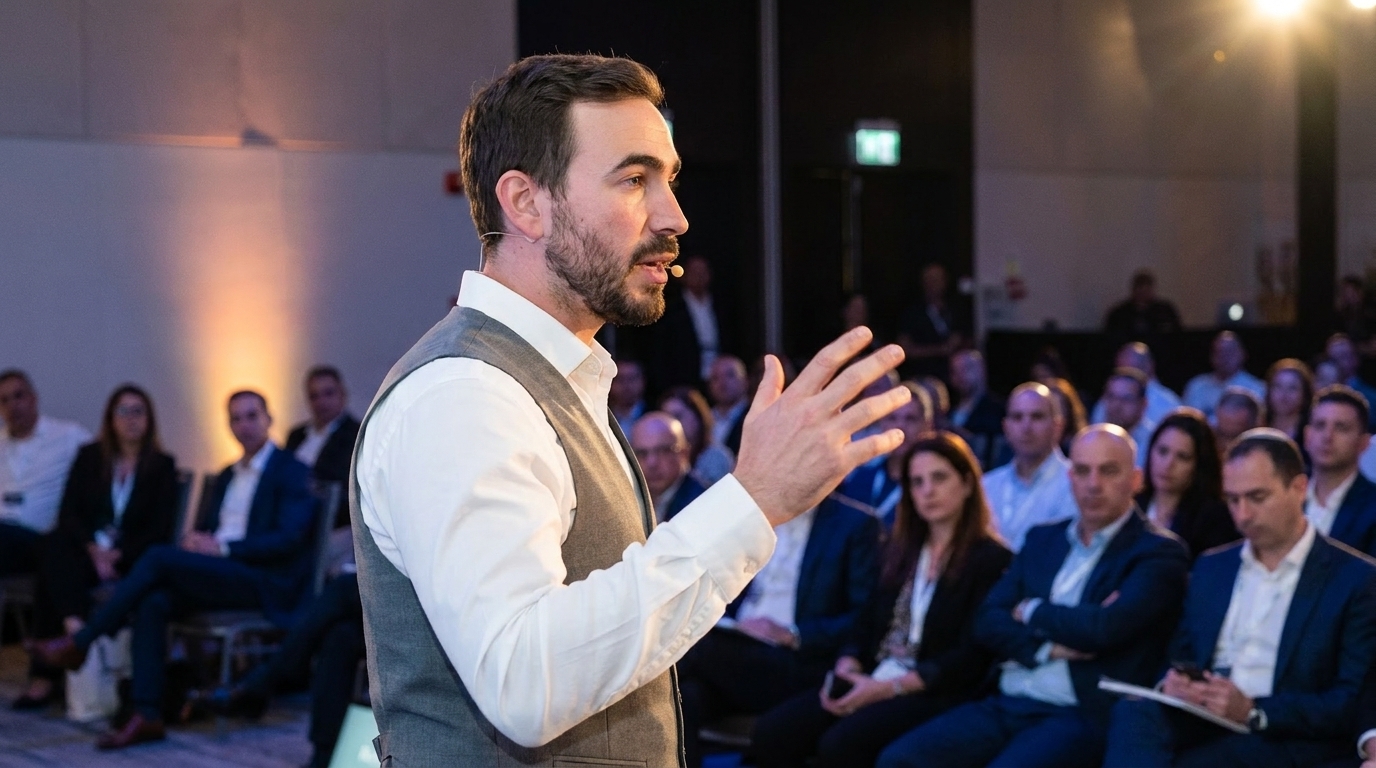
My lecture is called להיכנס לקופסא, and in English, WAND. One lecture, two names. The subject is practical belief design: how to shape the information people take in, and the belief they build out of it.
It runs on five principles. Attention, which works like a spotlight, because whatever you highlight gains importance. Certainty, the search for it, and what to understand about that search when you are looking for agreement. Wonder, a genuine WOW moment built with magic. Story, narrative and self-justification, the way advertising has always used them. And belief, which is the four combined.
The flow is WOW, HOW, NOW. First the audience experiences the demonstrations. Then I explain why they worked, meaning the mechanism of influence, not the secret of each trick (magicians would never forgive me, and more to the point, the secret is the least useful part). Then participants connect it to their own work, using a personal workbook of about five stops of questions and techniques.
It applies to sales, marketing, management, negotiation, branding and HR. When I am booked as a keynote speaker, the magic is not decoration between slides. It is the evidence. I competed at the FISM World Championship of Magic in Quebec in 2022 in the mentalism category, and I work with these principles on a stage constantly, which is a strict teacher: if the magic does not work, the show does not work.
Where I say the honest thing about influence
People influence each other all day long. The moral question, as I see it, is whether the person being influenced is harmed. Whoever picks up the tools owns that choice.
So I will not promise you that your team will leave able to make anyone believe anything, and I will not promise a measurable rise in sales. Anyone who does is selling you a feeling, and you will notice the bill later.
When should you not pay a keynote fee at all?
This is the part that costs me bookings. I would rather lose them here than on site.
If the evening is a year-end event where people want to eat, drink and enjoy each other, a lecture is a tax on the room. What that night wants is a mentalist show, the same skill aimed at delight instead of insight, and I will argue for it against my own lecture if your brief points that way.
If the problem is that nobody stops at your stand, a speaker on a stage will not fix it. That is work for a trade show magician on the floor, and I wrote some field notes on getting people to stop at a booth that will tell you more than a quote would.
And if your agenda has already overrun and lost the room, no talk repairs that. It performs inside whatever conditions the day has created, which is a subject I pulled apart in a piece on the attention problem on a Las Vegas conference stage.
One more constraint, since it decides things fast: I present in Hebrew and English only.
What to check before you ask for a quote
- Decide which format fits the slot: Zoom, a one-hour in-person taste, a two-hour deep dive, or the five-session series.
- Decide whether the audience is primarily sales, management, marketing, HR or mixed, because the questionnaire answers steer the examples.
- Get a manager ready to answer that pre-lecture questionnaire honestly about current challenges.
- Check the room for amplification, and tell me if it has none.
- Confirm the language of the session.
- Decide whether the event wants insight or delight, since that choice changes the service and therefore the number.
- Book while the date is free: there is no minimum lead time, but a date is only held for a limited period until a contract is signed.
How do you get a real number instead of a range?
By giving the person quoting enough to stop guessing. Vague briefs produce defensive quotes, and defensive quotes are always higher than they need to be.
The path on my side is short. An enquiry through the site, then a conversation with Ori, my personal manager, who works out the details and which service actually fits, then a quote and a contract, usually a deposit, then the event.
So, the decision in front of you before any money moves: does your room need insight or delight? Answer that with the room in mind rather than the budget line, and the brief more or less writes itself.
When you have it, send the date, the place, the number of guests and where in the agenda the session sits, through the contact form or the WhatsApp link on my lectures page. Ori will come back with what the day needs and what it costs, in that order, and if the honest answer is a different act entirely, you will hear that too.
Questions people ask
Why can't you just publish a price for your lecture?
Because the same lecture is a different purchase depending on its format, how much personalisation goes in, where it happens and when. A one-hour Zoom session and a five-part series are not comparable. A figure published here would be wrong for almost everyone reading it, so instead the number comes after a conversation with Ori, my personal manager, who works out what the event actually needs.
How far in advance should we book?
There is no minimum lead time, and I have taken bookings on short notice. The practical issue is that popular dates go early, especially around year-end. A date is held for a limited period while the details are agreed, and it stops being held once the window passes without a signed contract. If the date matters more than the format, start the enquiry before you finalise the agenda.
Can you adapt the lecture to our industry?
Yes, and that adaptation is part of the work. Before the session I send a manager a questionnaire about the organisation, the challenges it is dealing with now, and what to emphasise. The answers change which of the five principles get weight, which research examples I use, and which demonstrations appear. It applies across sales, marketing, management, negotiation, branding and HR.
Do you present in English?
Hebrew and English only. For an international conference in Israel or abroad, English is no problem, and the magic demonstrations travel better than jokes do. If your audience needs a third language, I am the wrong booking, and I would rather tell you that now than have you discover it when the room goes quiet in the wrong place.
What is the difference between booking the lecture and booking the show?
The lecture is about belief design: the demonstrations are evidence, and participants leave with a workbook of about five stops of questions and techniques. The stage show is built for enjoyment at a corporate event, typically about fifty minutes, adjustable by agreement. Both use the same craft. Only one of them expects your people to take notes.

Who writes here
Neta Bresler, mentalist and perception researcher. Ranked 7th in the world in mentalism, featured on Netflix, performing and speaking for companies and conferences in Israel and abroad. Everything here comes from the stage, not the library.
More about Neta